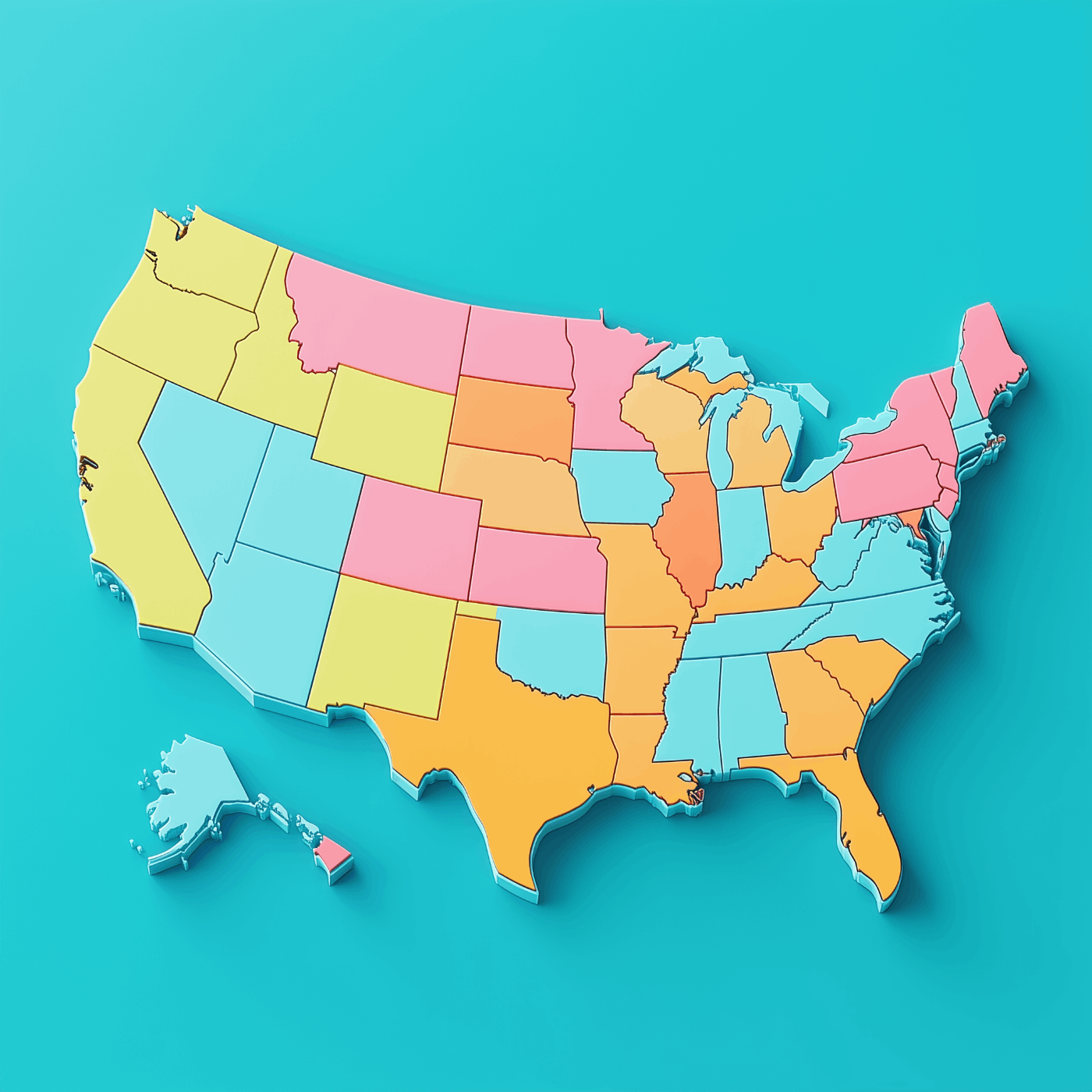
During the November 2024 election, 10 states had ballot measures to allow amendments to their constitutions regarding the ‘right’ to abortion. Seven of those initiatives passed.
Residents of Arizona, Colorado, Florida, Maryland, Missouri, Montana, Nebraska, Nevada, New York, and South Dakota voted on abortion legislation. Most of these related to codifying the right to abortion within the states’ constitutions.
State abortion laws for 2024 will change in some of these locations now that the procedure will be legal at the state level.
Overview of the State Referendums and Proposals
Since the U.S. Supreme Court overturned Roe v. Wade over two years ago, returning legislation back to the states, many governments implemented laws offering strong protections for preborn babies.
A few states, such as Texas and Florida, limit abortion to six weeks. Others, such as Ohio, moved in the opposite direction. Many state abortion legislation outcomes in November followed Ohio’s lead.
Voters in seven states — Arizona, Colorado, Maryland, Missouri, Montana, Nevada, and New York — approved measures to enshrine abortion into their states’ constitutions. The three other states — Florida, South Dakota, and Nebraska — voted down pro-abortion measures on the ballot.
Interestingly, five of the seven states that approved allowing abortion to be a “right” in their state voted for President-Elect Donald Trump, and some, including Montana, voted for Republican senators and members of Congress.
Detailed Analysis of State Votes and Outcomes
Nebraska
Nebraska had dueling initiatives in November, one increasing abortion access and the other protecting preborn babies after the first trimester. The pro-abortion ballot initiative, The Right to Abortion – Initiative 439, was defeated 51.2% to 48.8% while voters approved Initiative 434, banning abortion after the first trimester.
Initiative 434 maintains the law limiting abortion to the first 12 weeks of gestation, reads: “Shall the Nebraska Constitution be amended to include a new section which provides: ‘Except when a woman seeks an abortion necessitated by a medical emergency or when the pregnancy results from sexual assault or incest, unborn children shall be protected from abortion in the second and third trimesters.’”
The Nebraska constitution will be amended in Article 1 with language from Initiative 434.
South Dakota
Amendment G, The Right to Abortion, was defeated 58.6% to 41.4%. This measure would have provided a state constitutional right to abortion using a trimester framework for regulation:
- During the first trimester — the state could not regulate a pregnant woman’s decision to have an abortion.
- During the second trimester — the state could regulate abortion, but “only in ways that are reasonably related to the physical health of the pregnant woman.”
- During the third trimester — the state may regulate or prohibit women having abortions except “when abortion is necessary, in the medical judgment of the woman’s physician” and “to preserve the life and health of the pregnant woman.”
The measure didn’t receive support from high-profile pro-abortion advocates like the ACLU and Planned Parenthood because it didn’t “go far enough in guaranteeing abortion protections.”
Defeat of Amendment G kept in place the state’s near-total-ban on abortion, which only allows abortion in the case of potential death of a pregnant woman. Someone who performs an abortion can be charged with a Class 6 felony.
Florida
Amendment 4, “Amendment to Limit Government Interference with Abortion” states “no law shall prohibit, penalize, delay, or restrict abortion before viability or when necessary to protect the patient’s health, as determined by the patient’s healthcare provider.”
The measure did not pass. The proposal would have provided a constitutional right to abortion before viability or “when necessary to protect the patient’s health, as determined by the patient’s healthcare provider.”
Before 2022, abortion was legal in the state until the 24th week of pregnancy. In 2022, the legislature passed a 15-week ban on abortion, which was taken to the State Supreme Court. In 2023, Florida legislators passed the Heartbeat Protection Act, banning abortions at six weeks; the measure was contingent on the state’s highest court allowing the 15-week ban. It did, and the six-week ban took effect later that year.
More than 15 other states currently ban abortion at six weeks gestation. Some have exceptions, others do not.
Arizona
Residents voted for Proposition 139, establishing a person’s right to an abortion in the state constitution. This initiative says the state cannot interfere with a person’s right to an abortion before viability, considered as “in the good-faith judgment of a treating health care professional, the fetus has a significant likelihood of survival outside the uterus.” Additionally, the amendment says:
“Throughout the pregnancy, both before and after fetal viability, the State will not be able to interfere with the good-faith judgment of a treating health care professional that an abortion is necessary to protect the life or health of the pregnant individual. The State will not be able to penalize any person for aiding or assisting a pregnant individual in exercising the right to an abortion.”
Abortion has been legal in Arizona for up to 15 weeks’ gestation. This amendment changed as abortion will be allowed through ‘viability,’ considered to be 24 weeks. Arizona does not have exceptions for rape or incest.
A woman must also undergo an ultrasound and be offered the opportunity to view the image and hear an explanation of what the ultrasound shows at least 24 hours before an abortion.
Colorado
Voters in the state approved Amendment 79, a constitutional right to abortion. Colorado basically has no gestational limit on the procedure, with an abortionist in Boulder conducting surgical abortions through the third trimester.
This amendment recognized abortion as a right in the state. The government will be unable to discriminate in any way against that right.
It also removed Colorado’s ban on using public funds for abortions… meaning taxpayers will pay for abortions under Medicaid and other programs.
Additionally, local governments are barred from passing their own laws to try to restrict abortion.
Maryland
Ballot Question 1, Right to Reproductive Freedom, stated: “The proposed amendment confirms an individual’s fundamental right to an individual’s own reproductive liberty and provides the State may not, directly or indirectly, deny, burden, or abridge the right unless justified by a compelling State interest achieved by the least restrictive means.”
Pro-life opponents of the measure, including the Maryland Family Institute, cited concerns about the state already being one of “the most extreme in the country” regarding abortion and that the proposal would “undermine parental rights’ and provide basically no accountability” on abortion providers.
The amendment passed overwhelmingly. There appears to be no restrictions to gestational age, and Democratic Governor Wes Moore is quoted as saying, “I’ve been very clear from the beginning that as long as I am the Governor of Maryland, our state will be a safe haven for abortion access. This constitutional amendment will make sure it remains that way, no matter who is in office.”
Missouri
The state’s Amendment 3, Right to Reproductive Freedom Initiative passed by a narrow majority. This measure states people have a “right for reproductive freedom,” which is defined as “the right to make and carry out decisions about all matters relating to reproductive health care, including but not limited to prenatal care, childbirth, postpartum care, birth control, abortion care, miscarriage care, and respectful birthing conditions.”
For more than two years, Missouri had a ban on abortion except in cases of saving the life of or preventing a serious risk to the health of a pregnant woman. Missouri was the first state to ban abortion after the downfall of Roe except in exceptional cases. The ban on abortion will remain in effect after fetal viability, except as outlined in previous state law: where the mother’s health or life is at risk.
Because of the previous near-total ban on abortion in the state, people on both sides of the issue expect a final decision of what the passage of the amendment will look like and when it would go into effect to be taken up in the court system.
Montana
Montanans voted to codify abortion protection in the state constitution by passing CI-128, which states, in part, “a right to make and carry out decisions about one’s own pregnancy, including the right to abortion … and prohibit the government from denying or burdening the right to abortion before fetal viability.”
Additionally, the measure “Prevents the government from penalizing patients, healthcare providers, or anyone who assists someone in exercising their right to make and carry out voluntary decisions about their pregnancy.”
In 1999, the Montana Supreme Court ruled that the state constitution’s right to privacy law included the right to an abortion and, despite tactics and laws to limit abortion by the governor and state legislature in recent years, that ruling has kept abortion legal in the state.
Nevada
The state’s Question 6, known as the Right to Abortion Initiative, was another state constitutional amendment allowing for abortion. It differs from the other states which allow for change in their constitutions in that the Nevada measure must be approved in two elections, 2024 and 2026. Therefore, the measure will not go into effect unless passed again in two years.
Abortion in Nevada is legal through 24 weeks’ gestation. The procedure is allowed after “the physician has reasonable cause to believe an abortion is necessary to preserve the life or health of the pregnant person,” according to the state’s Department of Health website. A person doesn’t need to reside in Nevada to receive an abortion in the state.
Need for PreBorn! Clinics
Whether or not abortion is enshrined into state constitutions, the need for pro-life Pregnancy Clinics remains. PreBorn! Network Clinics around the country respond to that need, reminding women they have options, and their staff will walk alongside women and families experiencing unplanned pregnancies. Women and families receive all types of care, from medical to material, including resources to help them navigate their pregnancy journey.
Abortion not only kills a preborn baby, but it also affects women and families, often causing physical and emotional distress. States may view abortion as an easy solution, but thousands and thousands who have experienced abortion know that is a lie.
PreBorn! Network Clinics dispel that false narrative, showing pregnant women and families the truth about pregnancy: that a preborn baby is a human life with a beating heart and a right to life, the most joyous and grace-filled truth of all.
Nationwide Implications of the 2024 State Votes
Although voters in several states chose measures to protect life, many others did not.
A shift in attitude toward abortion may not necessarily be what is taking place, but instead, a possible adherence to the principles of personal independence and privacy and less governmental intrusion in an adult’s life.
Many western states, including Montana and Arizona, tout personal freedom and a dislike for governmental interference; therefore, citizens of those states may view even their legislators attempts to protect preborn babies through laws restricting abortion as interference into their personal lives instead of protecting lives of the smallest citizens.
With voters in 11 states deciding the outcomes of pro-life and pro-choice initiatives in 2024, the likelihood of additional measures arising on ballots and in the courtroom is high. States such as Wyoming and Iowa have experienced pro-life legislation hitting the court systems.