
Saving babies and souls is the primary mission of PreBorn!. With increasing access to chemical abortions, it’s urgent that abortion-minded women are shown an alternative and provided with compassionate care.
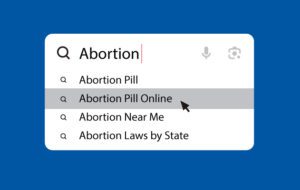
PreBorn! Has responded to this opportunity with a new Virtual Care System, meeting pregnant women who are vulnerable to abortion exactly when they are searching online for abortions.
Chemical abortion is easier to obtain than in years past
Chemical abortions, using the two drugs mifepristone and misoprostol, account for more than 63% of all abortions.
In March 2024, CVS and Walgreens started dispensing the abortion pills so women could have chemical abortions. Walgreens later divulged the company would not sell abortion pills in 20 states, after those states’ attorneys-general sent a letter threatening legal action.
Women can also order abortion pills online through various sites with some sites stating on “Fdespite several states having laws against dispensing abortion drugs through the mail.
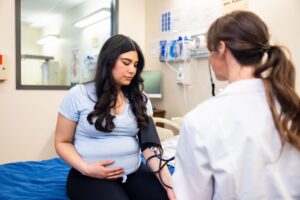
Telehealth and online forms don’t provide critical answers pregnant women need, such as how far along she is and whether she may have a life-threatening situation like an ectopic pregnancy. With little or no contact with a professional medical provider, pregnant women are left to bear the physical and emotional pain brought about from abortion drugs by themselves.
They are often isolated while going through the process of a chemical abortion, and if complications arise, which can happen, serious harm, even death, can occur. More than 25 women have reportedly died after taking abortion pills, and thousands of complications have been reported since the drugs came on the market in the United States in the year 2000.
Using other drugs for abortion purposes
Plan B (also known as emergency contraception), considered an abortifacient, can be found in many vending machines on colleges campuses. As many as “39 colleges and universities across 17 states” had such equipment installed, and one “will be installed at the University of Connecticut’s main campus in Storrs.”
“Progestin-based contraceptives like Plan B are commonly promoted as alternatives to abortion because they supposedly prevent pregnancy rather than end it. In January 2023, the U.S. FDA amended Plan B’s label to ‘clarify’ that it was not an abortifacient. But such drugs do in fact have abortifacient potential, and whether they prevent conception or implantation depends on when they are taken relative to a woman’s cycle.”
Such products are now being promoted as a possible alternative to one half of the abortion pill, mifepristone. In January, 133 people participated in a study to see if Ella (a pill somewhat similar to Plan B) might replace mifepristone as an abortion drug.
Researchers stated, “Ulipristal acetate [the progesterone-blocking ingredient in Ella], with a similar chemical profile, might be an alternative. This proof-of-concept study evaluated ulipristal acetate and misoprostol for medication abortion through 63 days of gestation. Pregnancy termination occurred with the combination of oral ulipristal 60 mg and buccal misoprostol 800 μg in 129 out of 133, or 97.0%, (95% confidence interval [CI], 94.1 to 99.9%), of participants.”
The researchers concluded, “This study suggests that ulipristal acetate [Ella] followed by misoprostol is an effective and acceptable medication abortion regimen with no reported serious adverse events.”
However, the Ella label instructs users that the drug is “not indicated for the termination of an existing pregnancy.” The drug was approved by the FDA “for the prevention of pregnancy following unprotected intercourse or a known or suspected contraceptive failure.”
Vending machines, pharmacy distributions of chemical abortion, mailing of such drugs, using the morning after pill as an abortion drug, telehealth abortion — all of these avenues thwart the importance of women being seen by physicians, escaping evaluations and critical information for a crucial decision.
Without oversight by a physician, pregnant women are in danger of abuse, from human traffickers and male partners forcing and coercing them take pills that kill preborn babies, along with the potential to physically and emotionally harm women.
Two years ago, the Charlotte-Lozier Institute outlined many potential risks, including hemorrhage, infection, and incomplete abortion. David Reardon has documented emotional side effects of abortion, including depression, anxiety, guilt, and grief. In a recent article, he states, “Women who abort are at higher risk of many mental health problems.”
Another study done by Reardon revealed that 24% of women felt coerced to have an abortion and another 43% said their abortions were “accepted but inconsistent with their values and preferences.” Additionally, 60% said they would have “preferred to give birth if they had received either more emotional support or had more financial security.”
Keeping this research in mind and seeing the increased assault upon women and their preborn babies through neglectful oversight of chemical abortion drugs, PreBorn! is now set to take the battle for life right to the source: women seeking abortion information online.
The Virtual Care System (VCS)
As chemical abortions (the abortion pills) surge, our strategy must evolve to meet the challenge head-on.
PreBorn!’s virtual care system (VCS) reaches women at their most critical moment—when they are searching online for abortion options. Each woman who reaches out is personally connected with a nurse who listens to her fears, answers her questions, and walks with her through the decision-making process.
Many are then referred to a PreBorn! Network Clinic, where they receive a free ultrasound and ongoing holistic care—empowering them to choose life for their preborn baby. Through VCS, we bring the light of Christ into the darkness of abortion, offering hope, healing, and a future for both mother and child.
Thousands of lives and souls are saved through this system as our nurses and Clinics share the gospel with every woman they encounter.
Spanish-speaking women are also helped through VCS thanks to interpreters who walk through the process with moms-to-be.
The Future of Clinics
As the rate of chemical abortions increases, PreBorn!, through VCS, goes to the front lines of the battle: online. A woman no longer needs to enter a clinic for an abortion – she simply needs the internet.
Her bathroom has become the abortion clinic, leaving her alone and frightened as she suffers through the trauma of a chemical abortion.
VCS cuts into the bottom line of abortion providers, taking away revenue obtained by death. More women reached. More lives saved. More souls for God’s Kingdom. VCS provides the necessary, hope-filled remedy for the online cultural push by satan to steal, kill, and destroy.