
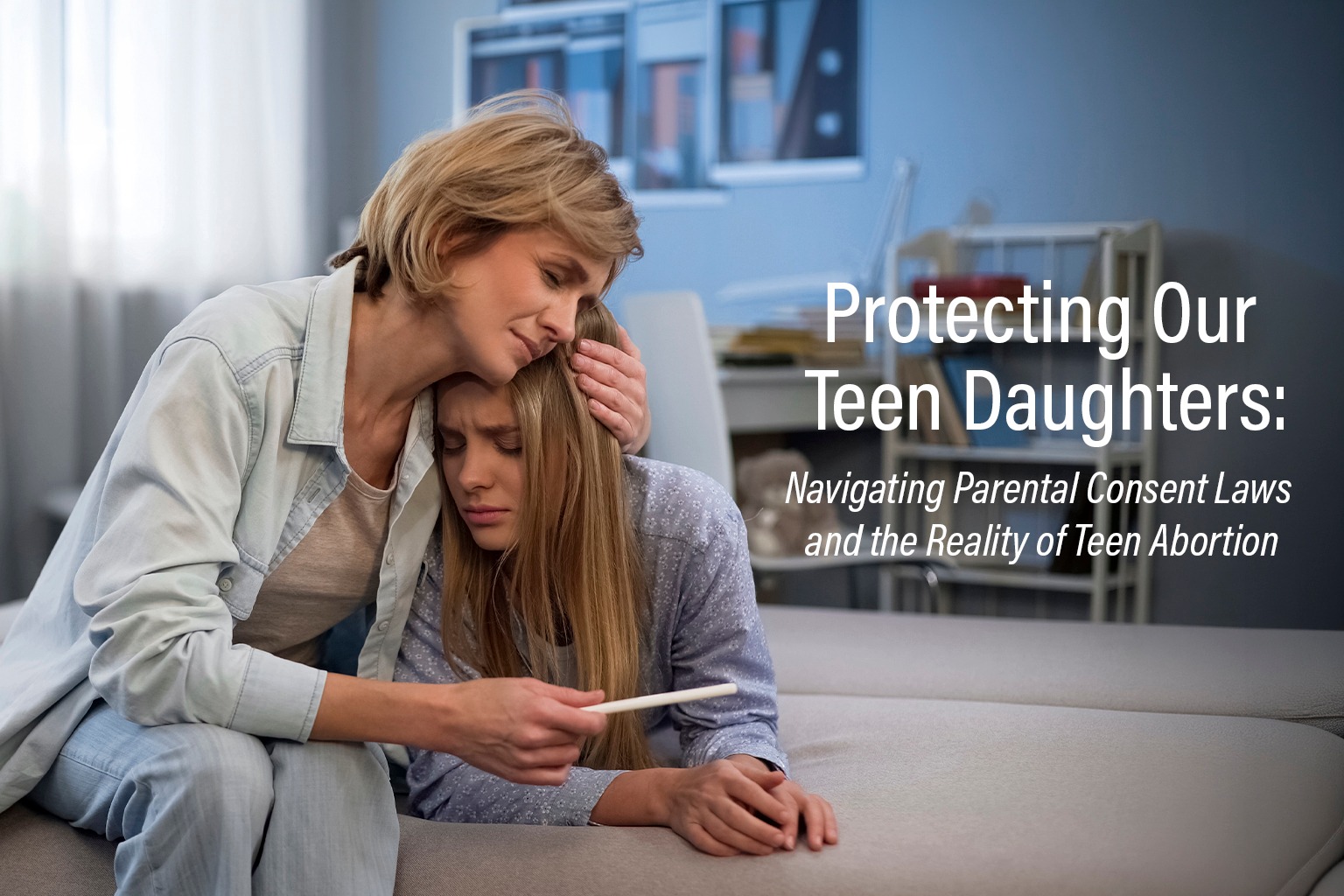
The bond between a parent and a child is one of the most fundamental instincts in humanity. From the moment a child is born, parents are their protectors, advocates, and primary source of guidance. We require parental consent for school field trips, ear piercing, and even taking an aspirin at the school nurse’s office. Society generally agrees that minors lack the maturity and life experience to make significant medical or legal decisions without the counsel of a guardian. However, when it comes to the life-altering decision of abortion, this safety net of parental involvement is becoming increasingly jettisoned across the United States.
For a teenage girl facing an unplanned pregnancy, fear is often a dominant emotion. She is likely terrified of her parents’ potential reaction, worried about her future, and feeling overwhelmingly isolated. In this vulnerable state, she needs adult guidance more than ever. Yet, a complex web of state laws, judicial loopholes, and the rise of the abortion pill by mail is making it easier for minors to undergo abortions in complete secrecy.
Understanding the current legal landscape regarding minors and abortion is crucial for parents, policymakers, and communities who wish to protect both the preborn and the young mothers carrying them. While many states have laws intended to keep parents involved, the abortion industry has developed robust methods to bypass these protections, often leaving young girls to navigate trauma alone.
The Landscape of Parental Involvement Laws
Currently, the United States is a patchwork of differing regulations regarding a minor’s access to abortion. According to the Guttmacher Institute, 38 states require some form of parental involvement in a minor’s decision to have an abortion. These laws are grounded in the belief that parents have a right to know about their child’s medical procedures and that minors benefitfrom adult counsel during such critical moments.
However, “involvement” is defined differently depending on where a person lives. The laws generally fall into two categories: parental consent and parental notification.
Parental Consent vs. Parental Notification
Parental consent laws are stricter than notification laws. In states requiring consent, a minor must obtain written permission from one or both parents before an abortion provider can perform the procedure. Currently, 21 states require parental consent. Some of these states, like Kansas, North Dakota, and Mississippi (although abortion is largely banned there, the law remains on the books), technically require the consent of both parents.
Parental notification laws, on the other hand, only require that the parents be told about the abortion rather than give permission. In the 10 states that require only notification, a doctor or clinic must inform the parent (usually within 24 to 48 hours), but the parent cannot legally stop the procedure from taking place. States that only require notification include Alabama, Delaware, Georgia, Maine, Minnesota, Nebraska, Nevada, Ohio, South Carolina, and West Virginia.
There are also hybrid states. Seven states require both notification and consent. Conversely, Connecticut, Oregon, Vermont, Washington, and a few others, have no parental involvement laws whatsoever. In these jurisdictions, a 13-year-old girl can walk into a clinic and obtain an abortion without her parents ever knowing.
Why Parental Involvement Matters
The argument for parental notification and consent laws extends beyond political ideology. From a medical standpoint, parents are usually the ones who know their child’s medical history, allergies, and previous health complications. If a minor undergoes a surgical procedure or takes potent medication without her parents’ knowledge, and complications arise—such as hemorrhaging or infection—the parents may not know how to advocate for their daughter or what information to give emergency responders.
Furthermore, removing parents from the equation isolates the minor. An unplanned pregnancy is a heavy burden. By legally cutting parents out of the process, the system often leaves young girls to process complex emotions, physical pain, and potential regret without the support system they need most. Additionally, minors who are victims of abuse may remain trapped in dangerous situations.
The “Judicial Bypass” Loophole
Even in states with strict parental consent laws, there is a legal mechanism that can circumvent parental rights: judicial bypass.
Most states that require parental involvement include a judicial bypass procedure. This allows a minor to appear before a judge—without her parents’ knowledge—to seek permission for an abortion. To grant this bypass, the judge typically must determine one of two things: either the minor is “mature” and “well-informed enough” to make the abortion decision on her own, or that the abortion is in her “best interest.”
The Process and the Paradox
The existence of judicial bypass creates a paradoxical legal standard. A minor is deemed too immature to vote, buy cigarettes, or sign a contract, yet a judge can declare her “mature” enough to decide to end the life of her preborn child.
According to policy data, 37 states have judicial bypass procedures. In 17 of them, judges are required to use a “clear and convincing evidence” standard to determine the minor’s maturity. While this sounds rigorous, pro-abortion advocacy groups and websites often provide detailed scripts and legal resources to help minors navigate this process successfully.
Organizations specifically dedicated to helping teens avoid parental notification have sprung up across the country. As highlighted by resources like “I Need An A,” there are specific hotlines and legal projects—such as the Judicial Bypass Project in Indiana or the Jane Network in Florida—that exist to provide free attorneys and guidance to minors so they can stand before a judge and secure an abortion in secret.
This process essentially replaces a parent’s love and protective instinct with a judge’s rubber stamp, effectively severing the family unit during a crisis.
Exceptions and Special Cases
Beyond judicial bypass, there are other exceptions written into state laws that allow medical providers to perform abortions on minors without parental input.
Medical Emergencies
Almost all states (37) include an exception for medical emergencies. If a physician determines that the minor’s life is in danger, parental consent or notification requirements are waived. While saving the mother’s life is a standard medical priority, the definition of “emergency” can sometimes be broadly interpreted depending on the provider.
Abuse and Neglect
State laws also grapple with the tragic reality of incest and abuse. Sixteen states include an exception or a specific basis for judicial bypass if the minor is a victim of abuse, assault, incest, or neglect.
In these heartbreaking scenarios, compassion is paramount. A minor who finds herself pregnant by an abuser is in a horrific situation. However, the solution offered by the abortion industry is often to end the pregnancy and return the child to the environment where the abuse occurred, rather than prioritizing the reporting of the crime and the removal of the child from danger. True compassion requires protecting the minor from her abuser, not just eliminating the evidence of the abuse.
The New Frontier: Telehealth and the Abortion Pill
Perhaps the most alarming development in recent years regarding minors and abortion is the rise of the chemical abortion pill (mifepristone and misoprostol) and the deregulation of how it is dispensed.
In the past, obtaining an abortion required a visit to a clinic. This logistical hurdle often meant minors had to account for their whereabouts, find transportation, and potentially cross paths with adults who might intervene. Today, the landscape has shifted dramatically toward “telehealth” abortion.
Identifying the Risks for Minors
Websites like AbortionFinder.org explicitly guide users on how to find virtual providers. The process often involves a brief video call or even just filling out an online form. Once approved, the pills are mailed directly to the user’s home or an address provided by the requester.
For a minor, this removal of safeguards is dangerous on multiple levels:
- Lack of Medical Oversight: Without an in-person ultrasound, it is impossible to accurately date the pregnancy or rule out an ectopic pregnancy (a life-threatening condition where the embryo implants outside the uterus). If a minor with an undiagnosed ectopic pregnancy takes the abortion pill, the result, such as the rupture of a fallopian tube, could be fatal.
- Solitary Trauma: The “at-home” abortion means the minor is often going through the labor and delivery of a deceased fetus alone in her bedroom or bathroom. She faces bleeding, cramping, and psychological trauma without medical staff or a loving parent nearby.
- Concealment from Parents: The mail-order nature of these pills makes it incredibly easy to hide the abortion from parents. A very discreet-looking package arrives; the pills are taken, and the parents may believe their daughter is simply having a heavy period or the flu.
Circumventing State Bans
In states where abortion is banned or heavily restricted, many organizations are actively helping minors skirt the law. “Community networks” and offshore pharmacies allow pills to be shipped into states with bans. Resources for teens explicitly mention that “depending on where you live, there may be some legal risk,” but then direct users to legal helplines to navigate those possibilities. The priority is placed on access to abortion rather than the safety or legality of the minor’s actions.
Navigating State Laws: The Push for Abortion Tourism
Because the United States is divided on this issue, with some states protecting the preborn and others expanding abortion access, a phenomenon known as “abortion tourism” has surged. Minors living in states with parental consent laws are frequently encouraged to travel to states without them.
The “Safe Haven” Strategy
Resources designed for teens, such as blogs on “I Need An A,” provide detailed instructions on how to travel for an abortion. They highlight states like California, New York, Illinois, and New Mexico as destinations where parental involvement is not required.
For example, a minor in Texas (where abortion is banned) might be advised to travel to New Mexico. Because that state has no parental involvement laws, a 15-year-old could theoretically be driven there by an older boyfriend or a non-parent adult to obtain an abortion, and her parents would have no legal right to know.
This encouragement of interstate travel for minors undermines the authority of parents in their home states and potentially exposes young girls to trafficking. When a system is set up to help a minor disappear across state lines for a medical procedure, it creates a blueprint that predators can easily exploit.
A Compassionate Response: The Role of PreBorn!
In the face of these challenges, it is easy to feel disheartened. However, there is a powerful movement of compassion working to save both babies and their mothers from the tragedy of abortion. PreBorn! stands in the gap, offering a lifeline to women and minors who feel they have no other choice.
Empowering Through Truth
The abortion industry thrives on concealment—hiding the complex development of the baby by withholding ultrasounds and hiding the abortion from parents. PreBorn! counters this with truth and light. By partnering with a network of Clinics across the nation, PreBorn! provides free ultrasounds to women and minors facing unplanned pregnancies.
The ultrasound is a window into the womb. When a young girl sees the life inside her—the fingers, the toes, the beating heart—the abstract “problem” of pregnancy becomes a reality of life. Statistics show that when women see their babies on an ultrasound, over 80% will choose life.
More Than a Scan
PreBorn! understands that a young girl considering abortion is often driven by fear and a lack of resources. She doesn’t need judgment; she needs support. This is why PreBorn! Network Clinics provide comprehensive care:
- Gospel-Centered Counseling: Addressing the spiritual needs of the mother and offering her the hope and redemption found in Jesus Christ.
- Material Support: Providing diapers, formula, baby clothes, and maternity supplies to alleviate the financial burden.
- Parenting Classes: Equipping young mothers with the skills they need to raise their children.
- Options Consultation: Clinic staff also discuss the option of adoption, so if a woman or girl feels unable to parent, she receives information about adoption and can consult with a representative of licensed adoption agencies in her area.
By offering a holistic approach, PreBorn! ensures that choosing life is a supported, empowered decision.
Moving Forward with Hope
The legal landscape regarding minors and abortion is fraught with loopholes that endanger young girls and disregard the rights of parents. The expansion of judicial bypass and the deregulation of abortion pills create a culture of secrecy that leaves minors vulnerable to trauma and medical risk.
However, the answer to an unplanned teenage pregnancy is not to help the child hide it, but to surround her with the love and support she needs to bring new life into the world. Parents must be vigilant, keeping lines of communication open with their children. Communities must support organizations like PreBorn! that offer real solutions rather than a quick “fix” that ends a life.
We must advocate for laws that protect the family unit, but we must also work to change hearts. PreBorn! Network Clinics meet women where they are—overwhelmed and isolated—and welcome them in with true compassion. When a scared teenager walks into a Clinic, she needs to know that she is strong enough to either be a mother or choose adoptive parents, that her baby is a precious gift from God, and that she will not have to walk her path alone. By standing for truth and offering compassion, we can protect and stand beside our daughters and save the next generation.